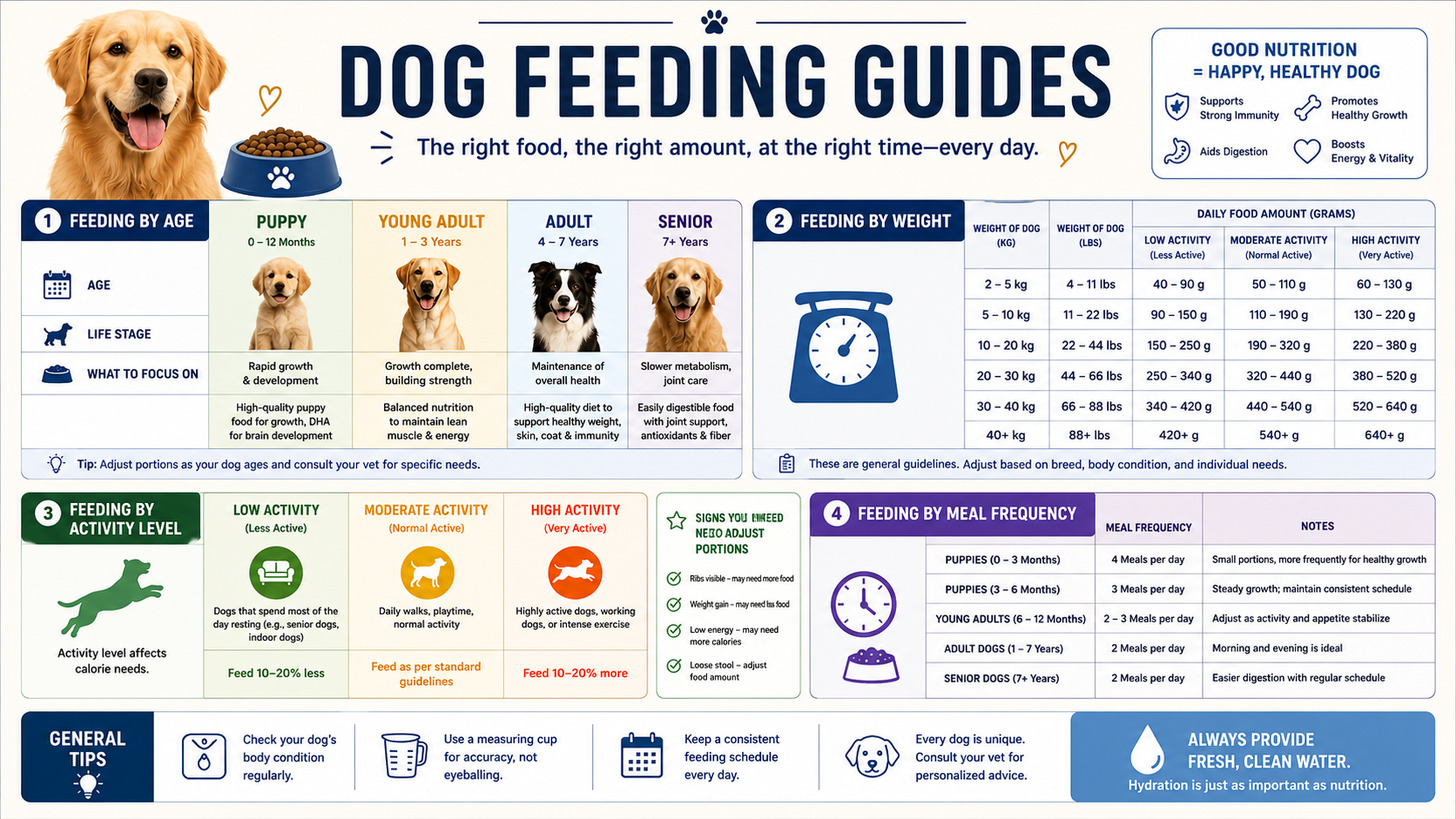
Good nutrition matters — for people and pets. A well-fed animal is more likely to live a longer, healthier life, so tailoring meals to your companion’s stage and lifestyle is essential. Our practical feeding guides help you match food and portions to your pet’s age, weight, and activity level.
Establishing a consistent routine early improves your dog or puppy’s well‑being. By focusing on feeding by age and feeding by weight, you supply the right ingredients for growth and maintenance. We also cover how feeding by activity level and adjusting meal frequency help prevent common problems like obesity and low energy.
Quick example: a 6‑month puppy needs higher calorie, growth‑focused food and more frequent meals than an 8‑year‑old adult dog on a weight‑management plan. Check your pet’s life stage below or jump to our at-a-glance feeding chart to get started.
Key Takeaways
- Optimal nutrition supports long-term health and quality of life.
- Tailor food and portions to life stage to avoid common complications.
- Weight and activity are primary guides for portion control.
- Consistent meal routines help regulate metabolism and body condition.
- Consult a veterinarian to confirm your pet’s individualized feeding plan.
Understanding the Fundamentals of Pet Nutrition
A balanced diet is more than just food; it is the fuel that powers your pet’s daily life. Knowing basic canine and feline biology helps you meet their nutritional needs by age and supports lasting health, energy, and vitality.
The Role of Macronutrients in Daily Health
Every meal supplies three primary macronutrients: proteins, fats, and carbohydrates. Proteins are essential for muscle growth and tissue repair — especially important for a growing puppy or an active dog. Fats supply concentrated energy and support skin and coat health. Carbohydrates provide quick energy and fiber for digestion.
Macronutrient targets shift with life stage: growth formulas for puppies are higher in protein and calories, while senior diets often prioritize digestible protein and controlled calories to maintain lean mass. For definitive ranges and life-stage standards, consult AAFCO or your veterinarian.
Identifying High-Quality Ingredients
Reading a pet food label can feel confusing; use these quick tips to spot better options:
- Look for named proteins (e.g., chicken, beef, salmon) near the top of the ingredient list — they indicate real meat sources.
- Check guaranteed analysis for crude protein and fat percentages appropriate to the life stage (puppy formulas will be higher).
- Avoid vague fillers listed as “meat meal” without a qualifier, and skip foods with artificial colors or xylitol.
- Compare kcal/cup (calories per cup) when switching brands so portion sizes stay accurate.
Example guaranteed-analysis comparison (illustrative): a typical puppy formula might list Crude Protein 28% / Crude Fat 16%, whereas a senior maintenance formula might list Crude Protein 22% / Crude Fat 12%. Always check the label and consult your vet for precise targets for your dog.
Choosing high-quality, bioavailable ingredients helps meet age-specific nutritional needs, supports energy and growth in puppies, and preserves health in adult and senior dogs. For a printable label checklist, refer to the resources in this guide.
Feeding Guides – Feeding by age, weight, activity level; meal frequency
Many owners follow the feeding chart on a bag of food, but those tables are only a starting point — one size rarely fits all. Actual needs vary by metabolism, breed, activity, and life stage, so use packaged feeding guides as a baseline and personalize from there.

Why One Size Does Not Fit All
Each animal’s metabolism is shaped by genetics, environment, and daily habits. A high-energy working dog needs denser calories than a senior cat that naps most of the day. Personalization prevents problems such as obesity, nutrient gaps, or excess growth in large-breed puppies.
Focusing on feeding by age and activity moves you from guesswork to an individualized plan that helps your companion thrive.
The Importance of Life Stage Nutrition
Early nutrition sets the stage for healthy growth and a robust immune system, while adult and senior formulas shift priorities to maintenance and age-related support. Use life-stage nutrition to protect bone development in puppies and joint and organ health in seniors.
“Nutrition is the silent architect of your pet’s longevity; by tailoring their intake to their specific life stage, you are investing in their future health and vitality.”
Annotated life-stage example (illustrative):
| Life StagePrimary FocusNutritional Goal | ||
| Puppy (0–12 mo) | Rapid growth | High protein (26–30%+), higher calories, adequate calcium |
| Adult (1–7 yr) | Maintenance | Balanced energy, moderate protein (20–26%), controlled calories |
| Senior (7+ yr) | Joint & organ support | High-quality protein, fewer calories, joint supplements as needed |
Quick practical example: a 12‑lb 4‑month puppy might need roughly 600–900 kcal/day (split into multiple meals) while the same‑weight adult may need 400–600 kcal/day depending on activity. Use these examples as a guide and visit the Calculating Daily Caloric Intake section for a personalized calculation and our downloadable life-stage checklist.
Navigating Nutritional Needs by Age
Managing your pet’s diet means matching food, portion sizes, and meal frequency to their life stage. Understanding nutritional needs by age helps your dog or puppy get the right balance of calories and nutrients from their first weeks through their senior years.
Puppy and Kitten Growth Phases
Young animals grow quickly and need calorie‑dense, nutrient‑rich diets. Typical meal frequency and goals by early age:
- 0–6 months: Frequent feeding supports rapid growth—offer 3–4 small meals per day for most puppies and kittens.
- 6–8 months: Many pets transition to 2–3 meals daily as growth slows; monitor weight and energy.
- 9–23 months: Large-breed dogs may benefit from controlled calories to slow growth; many medium/small breeds eat 2–3 meals daily or 3–4 if still growing rapidly.
Healthy snacks or training treats can be added but should remain part of the daily calorie budget.
Adult Maintenance Requirements
At maturity the focus shifts to weight management and long‑term health. Most adult dogs do well on 1–2 meals per day depending on temperament and schedule. Key points:
- Transition to an adult formula appropriate for your pet’s size and activity.
- Recalculate calories if activity level changes—reduce portions if your dog becomes more sedentary.
- Weigh and assess Body Condition Score (BCS) monthly to catch trends early.
Senior Pet Dietary Adjustments
Seniors often need fewer calories but higher-quality, digestible protein to preserve lean mass. Consider:
- Smaller, more frequent meals if appetite is reduced.
- Formulas with joint support, antioxidants, and easy-to-digest proteins as recommended by your vet.
- Regular vet checks to time diet shifts appropriately.
| Life StagePrimary FocusMeal Frequency | ||
| Puppy/Kitten | Rapid Growth | 3-4 Meals Daily |
| Adult | Maintenance | 1-2 Meals Daily |
| Senior | Joint/Organ Health | 1-2 Smaller Meals |
Calculating Daily Caloric Intake Based on Weight
To tailor feeding by weight, start with your pet’s ideal body weight and adjust for activity and life stage. Use BCS (Body Condition Score) rather than scale alone to judge whether to gain, lose, or maintain weight.

Determining Your Pet’s Ideal Body Condition Score
BCS is a visual and hands-on system vets use to determine if a pet is underweight, ideal, or overweight. At home, feel for ribs (should be palpable with light fat cover) and look for a visible waist from above. Regular BCS checks let you adjust feeding before problems develop.
How to Adjust Portions for Weight Management
Once you know your pet’s BCS and target weight, refine portions with this simple approach:
- Estimate daily calories needed using a calculator (Resting Energy Requirement × Life Stage/Activity factor). Use a reliable online calculator or consult your vet for exact multipliers.
- Measure food by weight or use a standard measuring cup; check your food’s kcal/cup on the label.
- To lose weight, reduce daily calories by about 10% and recheck BCS after 2–4 weeks. For gain, increase calories gradually.
Keep treats to ≤10% of daily calories. If weight change stalls or is rapid, consult your veterinarian to rule out medical causes and to get a precise calorie target.
| Body Condition ScorePhysical DescriptionRecommended Action | ||
| Underweight | Ribs visible; no palpable fat | Increase portion size gradually |
| Ideal | Ribs felt; waist visible | Maintain current feeding level |
| Overweight | Ribs hard to feel; no waist | Reduce calories by 10% |
| Obese | Heavy fat deposits; rounded | Consult vet for weight loss plan |
Worked example (illustrative): An adult, moderately active 20‑lb dog may need ~600 kcal/day. If the kibble is 300 kcal/cup, feed ~2 cups/day split into 2 meals. Use the “Calculating Daily Caloric Intake” tools in this guide for personalized numbers and a downloadable calorie‑to‑cups converter.
The Impact of Activity Level on Caloric Needs
Mastering feeding by activity level keeps your dog energized and at a healthy weight. Pets burn different amounts of energy depending on daily movement, age, and metabolism — so the same cup of food can be too much for a couch-bound companion and too little for a working dog.
Sedentary Pets vs. High-Performance Working Breeds
A mostly-indoor cat or a sedentary small dog needs far fewer calories than an active Border Collie or a search-and-rescue dog. Sedentary pets are at higher risk of obesity if portion sizes follow generic charts, while high-performance breeds require nutrient-dense meals to support endurance and muscle recovery.
Practical rule of thumb: adjust daily calories by activity — for light/sedentary pets use the lower end of the calorie range, for very active or working dogs increase by roughly 10–25% depending on intensity (consult your vet for exact multipliers).
“The greatest wealth is health, and for our pets, that starts with a bowl filled according to their true energy needs.”
Adjusting Meals for Weekend Warriors
Many pets are “weekend warriors” — mostly calm during the week, very active on weekends. On high-activity days, increase food slightly to match energy output; on quiet days, scale back. Track BCS (Body Condition Score) to ensure these fluctuations don’t cause weight drift.
Example: a typically moderate 40‑lb dog needing 900 kcal/day may burn ~1,100–1,200 kcal on a long hike day — add an extra 150–300 kcal that day and return to baseline afterward. Use treats within the ≤10% daily calorie guideline.
Establishing a Proper Feeding Schedule
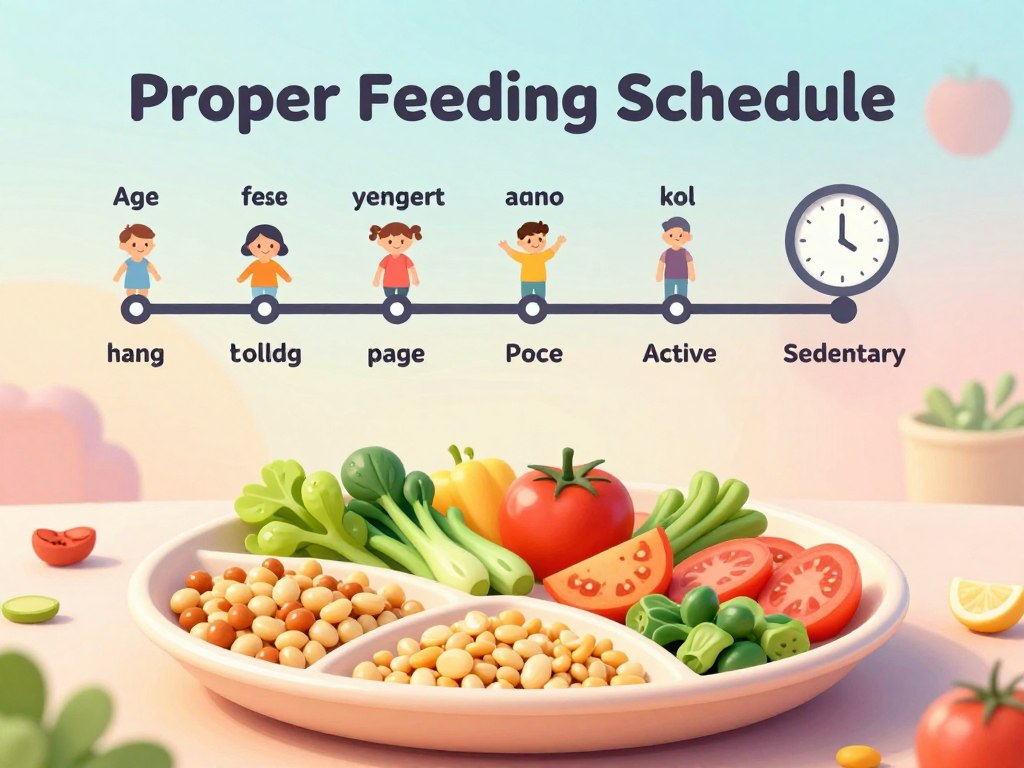
A clear proper feeding schedule improves behaviour and health. Meals at consistent times stabilize metabolism and make appetite changes easier to spot. Structured feeding also simplifies portion control and helps manage weight over time.
Benefits of Consistent Meal Times
Serving meals at the same times each day helps regulate digestion and energy. Predictable feeding reduces begging and food-guarding behavior and gives you a reliable baseline to notice appetite changes that may indicate illness.
“A structured routine is not just about convenience; it is a vital component of behavioral stability and physical well-being for our pets.”
Managing Free-Feeding vs. Scheduled Meals
Free-feeding (food left out all day) can work for some pets but often leads to overeating and makes monitoring intake difficult. Scheduled meals provide excellent portion control and accurate tracking for weight management.
| FeatureFree-FeedingScheduled Meals | ||
| Portion Control | Difficult | Excellent |
| Weight Management | Challenging | Highly Effective |
| Behavioral Impact | Variable | Promotes Stability |
| Health Monitoring | Limited | Very Accurate |
Quick Action Steps and Examples
- Sedentary indoor dog (30 lb): aim for lower-calorie range — e.g., ~400–480 kcal/day split into two meals (adjust by BCS).
- Active working dog (30 lb): increase 10–25% — e.g., ~480–600 kcal/day, split into 2–3 meals to support endurance and recovery.
- Weekend warrior plan: add 10–20% calories on high-activity days and reduce back to baseline the next day; always monitor BCS weekly.
Try this simple feeding schedule template: Morning — 50% of daily calories; Evening — 45%; Small training/treats — 5% (kept within total calories). For multi-meal plans, divide accordingly. Download the 7‑day schedule in the resources section to test what works for your pet.
Optimizing Meal Frequency for Digestion
Establishing a consistent meal frequency is a simple, high-impact way to support your pet’s metabolism and digestion. Observe your companion’s natural energy patterns and use responsive feeding—adjust portion timing and size based on appetite, activity, and comfort—to keep them feeling their best.
Why Multiple Small Meals Benefit Metabolism
Offering several smaller meals instead of one large serving can improve metabolic efficiency and maintain steady blood sugar. Smaller, spaced-out meals help nutrients be absorbed more consistently, reduce the post-meal slump, and lower the chance of frantic overeating. This approach often suits active dogs, puppies, and pets with sensitive digestion.
Consistent meal frequency also stabilizes hunger signals and reduces begging or frantic eating behavior. When meals are predictable, you’re better able to notice subtle appetite changes that could indicate health issues.
Preventing Bloat and Digestive Distress
Some breeds—especially deep‑chested dogs—are more prone to gastric torsion (bloat). Rapid consumption of large meals increases that risk. Breaking daily intake into smaller, measured portions and encouraging slower eating can lower the chance of dangerous digestive distress.
If your pet gulps food, try slow‑feeder bowls, puzzle feeders, or feeding smaller meals more often. These tools extend mealtime and promote a calmer, safer eating pace.
| Feeding StrategyMetabolic ImpactDigestive BenefitBest For | |||
| Single Large Meal | Fluctuating energy | Higher bloat risk | Rarely recommended |
| Two Daily Meals | Stable energy | Moderate safety | Most adult pets |
| Multiple Small Meals | Optimal efficiency | Lowest bloat risk | Active, growing, or sensitive pets |
Healthy Meal Planning for Balanced Diets
Healthy meal planning delivers the right mix of calories and nutrients for each life stage. A balanced diet for different ages ensures puppies get growth‑supporting energy while adults and seniors receive maintenance and targeted support for joints and organs.

Incorporating Fresh Foods Safely
Fresh foods can boost vitamins and minerals, but introduce them cautiously. Start with small portions and monitor for digestive upset or allergies. Safe additions often include cooked lean chicken, plain cooked pumpkin, steamed carrots, or green beans. Always avoid toxic foods such as onions, garlic, grapes/raisins, chocolate, and xylitol.
Tip: when adding fresh items, subtract their calories from the main meal so your pet’s daily kcal budget stays consistent.
Understanding Guaranteed Analysis Labels
The guaranteed analysis on pet food lists minimum/maximum percentages for crude protein, fat, fiber, and moisture. Use these numbers to compare formulas for different life stages, but pair them with the ingredient list to judge ingredient quality and source.
Illustrative read‑through: a puppy formula might show Crude Protein 28% / Crude Fat 16% (higher energy for growth), while an adult maintenance formula might show Crude Protein 22% / Crude Fat 12%. Check the label for kcal/cup to convert calories into cups or grams for accurate portioning.
| Nutrient CategoryPrimary FunctionCommon Healthy Source | ||
| Crude Protein | Muscle maintenance and growth | Chicken, Turkey, Fish |
| Crude Fat | Energy and skin/coat health | Salmon oil, Flaxseed |
| Crude Fiber | Digestive regularity | Pumpkin, Sweet potato |
| Moisture | Hydration support | Fresh water, Wet food |
Sample Balanced Meal (illustrative)
Life stage: Adult, moderately active 25‑lb dog — daily target ~600 kcal.
- Dry kibble (300 kcal/cup): 1.5 cups/day split into two meals (morning/evening).
- Optional mix-in: 1–2 tablespoons cooked chicken (adjust kcal from kibble).
- Treats: keep within ≤10% of daily calories (~60 kcal).
Want a ready plan? Download the meal‑plan template and the kcal‑to‑cups converter from the resources section to build a 7‑day feeding schedule tailored to your dog.
Addressing Breed-Specific Dietary Requirements
Every dog breed has a distinct biological blueprint that affects how it processes nutrients. General guidance is a useful start, but tailoring your approach to your breed helps ensure the right balance of calories, protein, and micronutrients across life stages. A balanced diet for different ages supports long-term health, activity, and longevity.
Small Breed Metabolic Rates
Small and toy breeds typically have fast metabolisms and higher energy needs per pound than larger dogs. They may require calorie‑dense food and more frequent meals to prevent hypoglycemia and maintain steady energy. Focus on nutrient-rich, high-quality proteins and healthy fats to fuel their activity without overloading stomach volume.
- Small-breed quick checklist: small, calorie‑dense kibble; 2–4 meals/day depending on age; monitor for hypoglycemia in very young pups; frequent BCS checks.
- Example: a 4‑lb toy‑breed puppy (8–12 weeks) may eat 3–4 small meals daily; consult your vet for kcal targets.
Large Breed Growth and Joint Support
Large and giant breeds face risks from overly rapid growth—too many calories or imbalanced calcium/phosphorus can stress developing joints. The goal is controlled, steady growth: adequate protein of high quality but moderated calories to avoid excess weight and skeletal strain.
- Large-breed quick checklist: feed large‑breed growth formulas designed to moderate growth rate; measure portions by kcal/cup; avoid excess supplements unless vet‑recommended.
- Example: a 10‑week Great Dane puppy will have very different kcal and portioning needs than a 10‑week Chihuahua—work with your veterinarian to set target growth curves.
Supporting joint health early—through appropriate calorie control, balanced minerals, and vet‑recommended supplements when needed—can reduce future mobility issues. Always consult your veterinarian before adding supplements like glucosamine or changing a large‑breed puppy’s diet to ensure dosing and timing match your dog’s growth curve and breed risks.
If you’re unsure about breed‑specific needs, ask your vet for a tailored plan: they can help translate target kcal/day into cups or grams based on your chosen dog food and monitor weight trends to keep growth on track.
Managing Dietary Sensitivities and Allergies
Seeing your pet suffer from chronic itching, repeated ear infections, or ongoing diarrhea can be upsetting. When symptoms consistently follow meals, investigate dietary sensitivities. Identifying the trigger is the first step toward restoring comfort and energy.

Identifying Common Food Intolerances
Food intolerances typically show up as chronic skin irritation, excessive licking, recurrent ear infections, or intermittent gastrointestinal upset. These reactions often develop over time as the immune system becomes sensitized to a specific protein or additive. Common triggers include beef, dairy, wheat, and chicken—ingredients that appear frequently in many commercial foods.
Start a simple symptom diary: record what your pet eats, treats, and any non-food exposures, plus the timing and type of symptoms. Patterns may take days or weeks to emerge, so patience and consistent logging are crucial.
Transitioning to Limited Ingredient Diets
If you suspect a food sensitivity, an elimination diet is the diagnostic gold standard. The process typically follows these steps (work with your vet):
- Choose a novel-protein or hydrolyzed diet your pet has not eaten before (venison, duck, or a vet-prescribed hydrolyzed formula).
- Transition slowly over 7–10 days by mixing increasing amounts of the new food with the current diet to minimize digestive upset.
- Strict trial period of 8–12 weeks with the elimination diet only (no treats, flavored meds, or table scraps) to allow symptoms to resolve.
- Rechallenge under veterinary supervision: reintroduce the suspected original ingredient to confirm the reaction.
Keep a clear diary during the trial—note stool quality, itching, ear condition, and energy. If symptoms improve on the elimination diet and recur on rechallenge, you’ve likely identified the culprit.
| Common AllergenPotential AlternativeBenefit | ||
| Beef | Venison | Novel protein source |
| Chicken | Duck | Easier to digest / less exposure |
| Wheat | Sweet Potato | Grain-free carbohydrate |
| Dairy | Coconut Oil (as supplement) | Healthy fats (avoid for true dairy allergy) |
The Role of Hydration in Pet Health
Hydration underpins kidney function, digestion, and overall metabolic balance. Consistent water intake helps prevent urinary issues and supports circulation and joint health. A fresh water bowl is one of the easiest preventive steps in daily care.
Wet Food vs. Dry Kibble Hydration
Food choice affects fluid intake: dry kibble generally contains about 8–12% moisture, while canned/wet foods often contain 70–80% water. Pets fed only dry food must drink substantially more to reach the same total daily moisture, so measure water access accordingly.
“Hydration is the silent partner of nutrition; without it, even the highest quality ingredients cannot be processed efficiently by the body.”
If your pet eats dry kibble, consider adding warm water or low‑sodium broth to increase moisture, or combine wet and dry food to boost daily water content.
Encouraging Water Intake Throughout the Day
Make water attractive and accessible with these practical tips:
- Multiple water stations: Place bowls in different rooms so pets always have easy access.
- Use a pet fountain: Many cats (and some dogs) prefer running water and drink more from fountains.
- Keep bowls clean: Wash daily to avoid bacteria or residue that can deter drinking.
- Add ice or broth: In warm weather, ice cubes can entice drinking; low‑sodium broth boosts flavor and moisture.
Monitor drinking patterns and report sudden increases or decreases to your veterinarian—changes can signal medical issues. For step‑by‑step elimination timelines, printable symptom diaries, and a hydration checklist, see the downloadable resources in this guide or book an allergy consult with your vet.
Monitoring Progress and Adjusting the Plan
Your pet’s dietary needs change over time — with growth, activity shifts, and aging. Nutrition is dynamic, so remain proactive: observe how your companion responds and make small, data‑driven adjustments that prevent larger health problems down the road.

When to Consult Your Veterinarian
You are your pet’s best day‑to‑day observer, but call a professional if you see sudden changes in appetite (refusal to eat or a dramatic increase), persistent vomiting or diarrhea, unexplained weight loss or gain, or marked lethargy. These signs can indicate medical issues that require diagnosis and treatment.
Quick action box — Call your vet if you notice: loss of appetite >48 hours, persistent vomiting/diarrhea >24 hours, sudden weight change, or severe behavior changes.
Tracking Weight Trends and Energy Levels
Regular weighing and simple logs reveal trends before they become problems. Keep a weekly weight record and a short daily note on energy and coat quality. If you see a steady climb or drop in weight, it’s time to recalculate calories and adjust portions.
Energy levels are equally telling: a well‑fed pet shows consistent vitality for their age and breed. Unexplained low energy may signal nutrient gaps or illness.
| ObservationPotential MeaningRecommended Action | ||
| Weight Gain | Excess calories | Reduce portion size / increase activity |
| Weight Loss | Insufficient calories or illness | Increase portion size / vet check |
| Low Energy | Nutrient deficiency or illness | Review diet / consult vet |
| Dull Coat | Insufficient healthy fats | Choose higher-quality food / review ingredients |
Common Mistakes in Pet Feeding
Good intentions don’t always translate to good feeding. Avoid common errors that undermine health and longevity.
The Dangers of Over-Supplementation
Many owners add vitamins or joint supplements assuming “more is better.” Over‑supplementation can create nutrient imbalances and harm organs or skeletal development. Most high‑quality commercial diets are complete; always check with your vet before adding supplements.
Avoiding Harmful Human Food Additions
Human foods can be toxic — even small amounts. Keep a list of prohibited items and be careful about table scraps and dropped food.
| Human FoodPotential RiskSeverity | ||
| Grapes and Raisins | Kidney failure | High |
| Chocolate | Heart and nervous system issues | High |
| Onions and Garlic | Red blood cell damage | Moderate |
| Xylitol (Artificial Sweetener) | Liver failure and hypoglycemia | Critical |
Seasonal Adjustments to Feeding Routines
Your pet’s activity and caloric needs shift with the seasons. Monitor activity and adjust slowly — small tweaks protect weight and energy.
Winter Caloric Needs vs. Summer Activity
In winter, many pets are less active; consider decreasing calories 5–10% if activity drops. In summer, increased play and longer walks may justify a 5–10% increase. Watch for fatigue or weight loss as signs a further adjustment is needed.

Adapting to Environmental Changes
Extreme heat or cold can change appetite and metabolism. Stay flexible — offer slightly smaller portions during temporary inactivity or slightly more on very active days. Hydration becomes especially important in heat; always keep fresh water available.
| SeasonActivity LevelCaloric AdjustmentPrimary Focus | |||
| Winter | Low/Sedentary | Decrease 5-10% | Weight Maintenance |
| Spring | Increasing | Monitor/Baseline | Energy Balance |
| Summer | High/Active | Increase 5-10% | Hydration & Fuel |
| Autumn | Decreasing | Monitor/Baseline | Weight Maintenance |
Conclusion
Optimal nutrition is one of the most powerful ways to extend and improve your pet’s life. Use the tools in this guide — BCS checks, calorie calculations, consistent feeding schedules, and vet partnerships — to create a plan tailored to your dog or puppy’s age, weight, and activity.
Small, consistent actions (accurate portions, weekly weight checks, and timely vet consultations) translate into long-term benefits: better energy, healthier weight, and a shinier coat.
Start a 4‑week feeding log today to track progress and bring it to your next veterinary visit. For specialized advice, find a veterinary nutritionist or book an appointment with your vet.
FAQ
Why are specialized feeding guides so important for my pet’s development?
How does feeding by weight differ from the instructions on the food bag?
What are the benefits of increasing meal frequency for my dog or cat?
How should I adjust nutritional needs by age as my pet matures?
Does my pet’s activity level really change their caloric requirements?